Back

-
Solutions
Back
Digital Trust for:
Enterprise IT, PKI & Identity
Code & Software
Documents & Signing
IoT & Connected Devices
Manage PKI and Certificate risk in one place
Manage PKI and Certificate risk in one place
The smarter way to manage certificate lifecycles
Continuous Signing for CI/CD & DevOps
Secure, flexible and global signing
Trusted from silicon to in-the-field
Device security without compromise
Accelerate secure app development
Streamlined Certificate
Management and Automation:
Delivering At-Scale Uptime and Availability
2022 Edition of the TLS/SSL Best Practices Guide
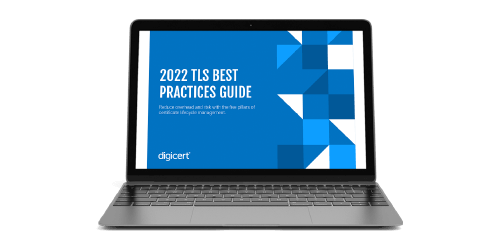
2022 Edition of the TLS/SSL Best Practices Guide
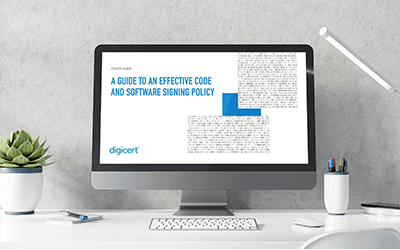
How to establish a signing policy DevOps will actually adopt
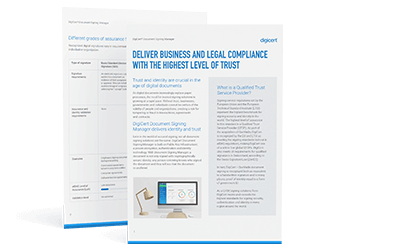
Global perspective on managing document signing and regulations
Secure, update, monitor and control connected devices at scale
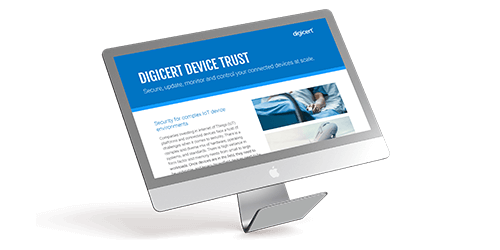
Secure, update, monitor and control connected devices at scale
Secure, update, monitor and control connected devices at scale
Secure, update, monitor and control connected devices at scale
DOWNLOAD NOW -
Buy
BackWildcard DomainBUY
Find the right TLS/SSL Certificate to secure your website
eIDAS-compliant transaction and website document security solutions
-
Insights
Back
Digital Trust for the Real World
Explore these pages to discover how DigiCert is helping organizations establish, manage and extend digital trust to solve real-world problems.
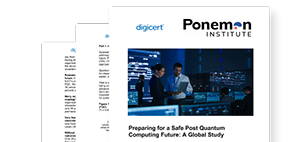
Ponemon Institute Report
See what our global post-quantum study uncovered about where the world stands in the race to prepare for quantum computing.
LEARN MORE >
-
Partners
Back
-
Support
Back
CONTACT OUR SUPPORT TEAM
- Americas
- 1.866.893.6565 (Toll-Free U.S. and Canada)
- 1.801.770.1701 (Sales)
- 1.801.701.9601 (Spanish)
- 1.800.579.2848 (Enterprise only)
- 1.801.769.0749 (Enterprise only)
- Europe, Middle East Africa
- +44.203.788.7741
- Asia Pacific, Japan
- 61.3.9674.5500
- Americas
- Contact us
- Language



- 5G Security
- Android
- Announcements
- Artificial Intelligence
- Authentication
- Automation
- Best Practices
- Blockchain
- Breaches
- Browsers
- CA Browser Forum
- CertCentral
- Certificate Inspector
- Certificate Lifecycle Management
- Certificate Management
- Certificate Pinning
- Certificates
- Cloud Security
- Code Signing
- Compliance
- Crypto-Agility
- Cybersecurity
- DDoS
- DMARC
- DNS Trust Manager
- Data Security
- Device trust
- DigiCert Labs
- DigiCert One
- DigiCert PKI Platform
- Digital Trust
- Document Signing
- Document Trust Manager
- EV UI Changes
- Elections
- Encryption
- Enterprise Security
- Events
- Extended Validation
- General
- Guest Author
- Health IT
- Healthcare Security
- Identity
- Internet of Things
- Malware
- Migration
- Mobile
- Multi-Factor Authentication
- National Cyber Security Awareness Month
- Network Security
- News
- Open SSL
- PKI
- PQC (Post-Quantum Cryptography)
- PSD2
- Partner Blog
- Partner Program
- Press Release
- Privacy
- Product
- QWACS
- RSA
- Root Certificates
- S/MIME
- SSL Certificate Management
- Secure Remote Work
- Security 101
- Smart Seal
- Software Trust Manager
- TLS/SSL
- Trust Lifecycle Manager
- Undefined
- Verified Mark Certificates
- Vulnerabilities
- WIFI Security
- Zero Trust


Top Videos
Identity
Identity on the brink
Identity is the cornerstone of what digital security is meant to protect and it’s never been more at risk. It's time to for the industry to decide.
UP NEXT
<
1
/
1
>
Recent Stories
N Stories



.jpg)


.png)
.png)


.jpg)


.png)


.jpg)


.jpg)


.jpg)


.jpg)


.jpeg)


IoT Breakthrough Security Product of the Year

Best in Biz Enterprise Product of the Year (Security Software) Silver Winner
Frost & Sullivan Global TLS Certificate Company of the Year
IoT Evolution Product of the Year
-

The most-trusted global provider of high-assurance TLS/SSL, PKI, IoT and signing solutions.
-


-
Company
-
My Account
-
Resources
-
Solutions
-
© 2024 DigiCert, Inc. All rights reserved.
Legal Repository Audits & Certifications Terms of Use Privacy Center Accessibility Cookie Settings